2026 ConvergX Congress Agenda

Tuesday – 22 September

08:00 – 12:00 Invite Only Executive Roundtable
14:00 – 16:00 Invite Only Executive Roundtable
16:00 – 20:00 Welcome Reception – Romero Distillery

Wednesday – 23 September

7:30 – 8:00 Breakfast
8:00 – 8:15

Welcome & Opening Remarks

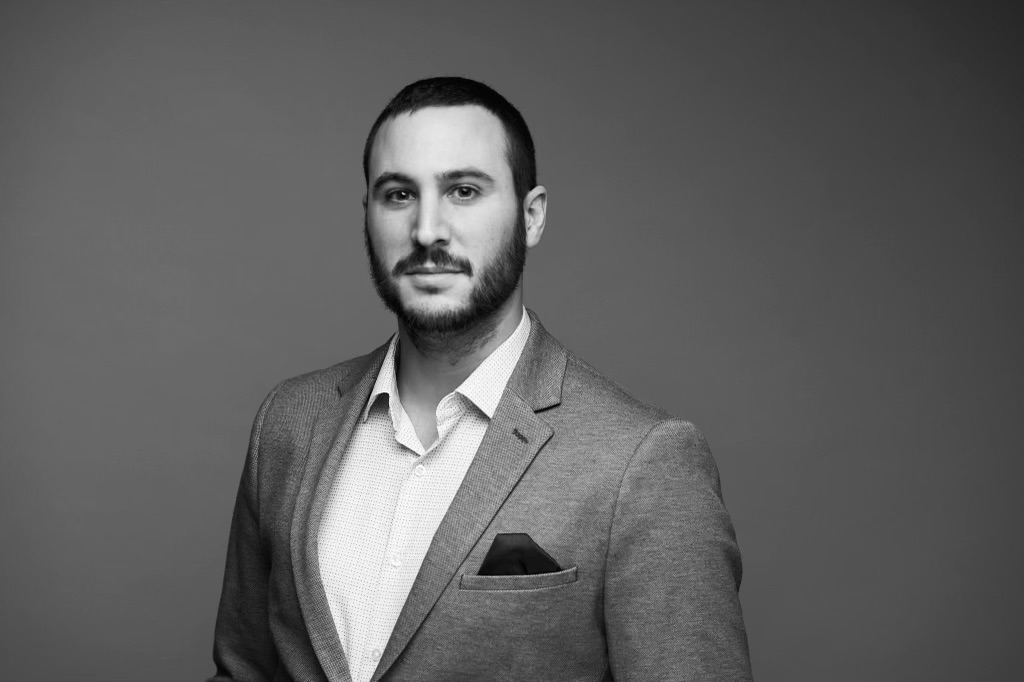
Kimberley Van Vliet – Founder & CEO WaVv and ConvergX®; Cdn Delegation NATO Industrial Advisory Group (NIAG)

8:15 – 8:45

Welcome from the Province

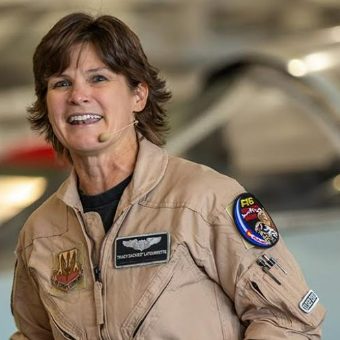
Opening Keynote – Tracy Latourette

Building Resilience to Perform in the Storm™

8:45 – 10:00

Session #1 – ConvergX-U

State of the Union on Defence
Dr. David Perry
President, CGAI

State of the Union on Energy
Gupreet Lail
President, Enserva

State of the Union on Mining

State of the Union on Agriculture

10:00 – 10:15 Break
10:15 – 11:30

Panel #2 – The Convergence Reckoning: What Worked, What’s Buying Now

The era of innovation driven by possibility is giving way to an era defined by proof, adoption, and measurable impact. Markets are increasingly rewarding solutions that solve immediate operational challenges, deliver demonstrable value, and integrate seamlessly into existing ecosystems. The organizations that thrive will be those that understand not only what is technologically possible, but what customers are willing to buy, deploy, and scale today. Success in the next phase of innovation will belong to those who can bridge the gap between invention and implementation, transforming emerging technologies into trusted, commercially viable solutions.

11:30 – 12:00 Pre-Lunch Reception & Networking
12:00 – 13:30 Lunch & Keynote Speaker
13:30 – 14:45

Panel #3 – Industrial Sovereignty and the Commercialization Engine: Defence and Commercial Scale

Allied industrial capacity is a sovereignty question across both defence and commercial domains. Critical minerals, semiconductors, pharmaceuticals, energy infrastructure, advanced manufacturing, food production, and construction capacity have all been re framed as strategic — and the procurement pathways, capital flows, and partnership structures that scale them now serve both military and commercial buyers, often through the same factories, the same supply chains, and the same workforces.

Allied industrial capacity is a sovereignty question across both defence and commercial domains. Critical minerals, semiconductors, pharmaceuticals, energy infrastructure, advanced manufacturing, food production, and construction capacity have all been re framed as strategic — and the procurement pathways, capital flows, and partnership structures that scale them now serve both military and commercial buyers, often through the same factories, the same supply chains, and the same workforces.

14:45 – 15:15 Break
15:15 – 16:30

Panel #4 – Extreme Environments as Commercialization Accelerators

The most valuable innovations are not proven in controlled environments—they are proven where failure is costly, conditions are unpredictable, and performance matters most. Extreme environments act as natural commercialization accelerators by forcing technologies to demonstrate reliability, resilience, scalability, and operational value under real-world pressures. Organizations that embrace these environments as validation and deployment platforms can reduce commercialization risk, accelerate adoption, and create solutions that are more competitive across global markets. The future of innovation will increasingly belong to those willing to test, learn, and scale where the stakes are highest.

16:30 – 16:45 Announcements and housekeeping for Day 2 and Evening Reception
16:45 – 20:00 Evening Networking Reception, Entertainment and Spirits Tasting

Thursday – 24 September

7:30 – 8:00 Breakfast
8:00 – 8:15

Welcome & Opening Remarks

Kimberley Van Vliet – Founder & CEO WaVv and ConvergX®; NATO Industrial Advisory Group (NIAG)

8:15 – 8:45 Keynote – TBA
8:45 – 10:00

Panel #5 – Integrated Resource Security and Commercial Resilience

Energy, food, and public health systems are no longer separable from the commercial systems that operate them. The same sensing and infrastructure capabilities — satellite, IoT, AI, biosensing, edge computing — are bought by intelligence agencies and by major utilities, by national health authorities and by major hospital networks, by defence sustainment and by major agricultural cooperatives.

The future of economic competitiveness will depend on the ability of organizations and nations to secure access to critical resources while building resilient, adaptive, and trusted commercial ecosystems. Resource security is no longer confined to extraction, production, or logistics; it is a strategic imperative that spans supply chains, infrastructure, technology, workforce capacity, and market access. Those who successfully integrate resource security with commercial resilience will be best positioned to withstand disruption, capitalize on emerging opportunities, and sustain long-term growth in an increasingly interconnected and unpredictable world.

If the next major resource shock hits in the next three years, are allied systems more prepared than they were in 2020 — across both security and commercial resilience — or have we just convinced ourselves we are?

10:00 – 10:15 Break
10:15 – 11:30

Panel #6 – AI, Autonomy, and Human Performance at the Edge

The organizations that lead the next industrial era will be those that successfully combine artificial intelligence, autonomy, and human expertise into integrated systems that amplify performance rather than automate for automation’s sake. Competitive advantage will belong to enterprises capable of creating trusted human-machine ecosystems that enhance decision quality, operational resilience, workforce effectiveness, and adaptability at the edge. Across every industry, the future of productivity, safety, and innovation will be defined by how effectively humans and intelligent systems work together to solve increasingly complex challenges in real-world environments.

11:30 – 12:00 Pre-Lunch Reception & Networking
12:00 – 13:30 Lunch & Keynote Speaker
13:30 – 14:45

Panel #7 – Capital, Competition, and the Geopolitics of Convergence

The defining competitive advantage of the next decade will not be determined by technology alone, but by the ability to align capital, innovation, industrial capacity, and strategic interests within interconnected ecosystems. As geopolitical competition increasingly shapes investment flows, supply chains, and technology adoption, success will belong to organizations and regions that can effectively mobilize capital, accelerate commercialization, build resilient partnerships, and create trusted pathways for innovation to scale. In a world defined by convergence, economic influence and technological leadership will be inseparable.

14:45 – 15:15 Break
15:15 – 16:30

Panel #8 – Convergence as Commercial Opportunity

The future of commercial success will be defined by the ability to recognize and capitalize on convergence. As technologies, industries, and markets become increasingly interconnected, the greatest opportunities for growth, innovation, and value creation will emerge at their intersections. Organizations that embrace collaboration, build cross-sector partnerships, and create ecosystems capable of integrating diverse capabilities will be better positioned to identify unmet needs, accelerate commercialization, and unlock entirely new markets. In the convergence economy, competitive advantage belongs not to those who operate within industries, but to those who connect them.

16:30 – 17:45 Closing Keynote & Wrap Up Reception

Schedule subject to change. To stay up to date, please check back often.